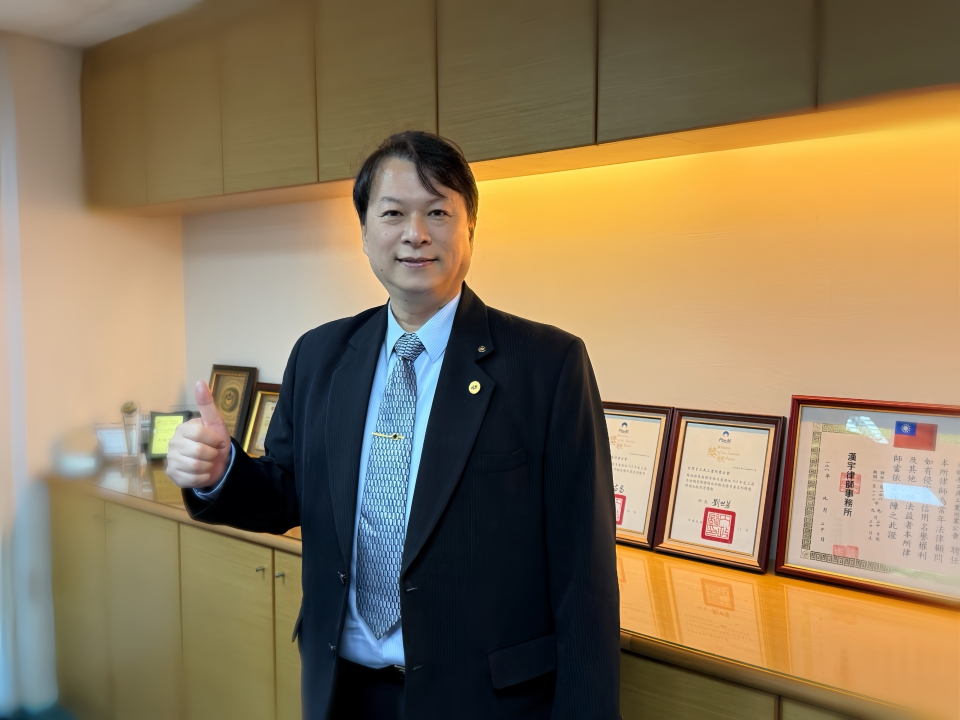



Chairman Alan Hsieh Takes the Helm of THTMA, Advancing Talent, AI, and Branding to Drive Industry Transformation
2026/01/14 | By Sherry Chen
At a critical juncture defined by global industrial realignment and a generational transition across Taiwan’s traditional manufacturing sectors, the 17th Taiwan Hand Tool Manufacturers’ Association (THTMA) has appointed Mr. Alan Hsieh as its new chairman. Notably, nearly 80% of the newly elected board members represent next-generation successors, underscoring a decisive transition toward what many describe as a new era of “next-generation stewardship.” As a prominent figure within this emerging cohort, Chairman Hsieh quickly took initiative upon assuming office, articulating a clear reform agenda and setting forth a coherent blueprint for the future development of Taiwan’s hand tool industry.
Looking ahead, Chairman Hsieh places particular emphasis on talent cultivation and generational succession. He observes that many Taiwanese hand tool manufacturers remain small in scale, operating under family-led management structures and relying heavily on experience-based decision-making. In an increasingly volatile and fast-evolving global market, these legacy models are proving insufficient. To address this structural challenge, the association will launch an executive education program in collaboration with National Chung Hsing University beginning next year. Designed specifically for business owners and senior executives, the program aims to strengthen managerial discipline, enhance strategic decision-making, and build the organizational capabilities necessary for sustainable growth.
Chairman Hsieh has also outlined a comprehensive strategy to redefine the association’s role, positioning it as a nexus for industrial upgrading, technology advancement, and policy engagement. As member companies confront rising demands associated with digital transformation, capital-intensive equipment upgrades, and innovation-driven production, he emphasized that the association’s responsibility is to proactively connect members with government resources, including subsidy programs, preferential financing, and technology-upgrade initiatives. At the same time, the association will function as an information hub, delivering timely insights into industry trends, market dynamics, supply chain dynamics, and policy analysis to help enterprises manage risk and strengthen competitive resilience.
From a macro perspective, Chairman Hsieh notes that global supply chains are undergoing irreversible restructuring driven by geopolitics, shifts in U.S. tariff policy, the green transition, and accelerating digitization. While these forces present significant challenges, they also create a strategic inflection point for Taiwan’s hand tool sector. Traditional cost-driven, volume-oriented manufacturing models are increasingly misaligned with global demand. To remain competitive, the industry must transition from conventional manufacturing to smart manufacturing, and from an OEM-centric mindset toward branding and higher value-added production.
Within this transformation, Chairman Hsieh identifies artificial intelligence and smart manufacturing as critical enablers of industrial upgrading. Amid global labor shortages and rising demand for high-mix, low-volume production, AI adoption has become essential to improving productivity, optimizing cost structures, and ensuring consistent quality. The association will therefore prioritize AI talent development and encourage member companies to integrate AI technologies across production workflows, including intelligent scheduling, quality analytics, and predictive maintenance. The objective is to lower barriers to automation, ensuring that advanced manufacturing capabilities are accessible not only to large enterprises but also to the broader SME ecosystem.
Chairman Hsieh further calls on industry players to strengthen brand equity and product differentiation. While Taiwan’s hand tool sector is widely recognized for its manufacturing excellence, its global influence has long been constrained by an OEM-dominated business model. Breaking this limitation requires a deliberate integration of design, R&D, and brand strategy, transforming hand tools from standalone products to intelligent, system-integrated solutions. This shift, he argues, is fundamental to long-term value creation and to enhancing Taiwan’s voice in the global industrial landscape.
Taken together, Chairman Hsieh’s policy priorities reflect the strategic discipline and forward-looking perspective of a new generation of leadership navigating structural transformation. His vision extends beyond individual enterprise upgrades to emphasize collective alignment across the supply chain ecosystem. By leveraging the association as a platform for talent development, AI-enabled manufacturing, policy coordination, brand building, and international market expansion, he seeks to unite next-generation leaders in building a more competitive, innovative, and globally relevant Taiwanese hand tool industry.
Under his leadership, the association is poised to evolve beyond a networking forum into a catalyst for structural change, facilitating cross-industry collaboration and accelerating sector-wide upgrading. Through sustained innovation and coordinated action, Chairman Hsieh envisions Taiwan’s hand tool industry not only securing its position amid global supply chain realignment but also ushering in new growth opportunities and reinforcing its strategic standing in the global hand tool market.