



China Steel Bets on Advanced Steels in Five-Year Shift Toward Robotics and Drones
2025/12/23 | By CENS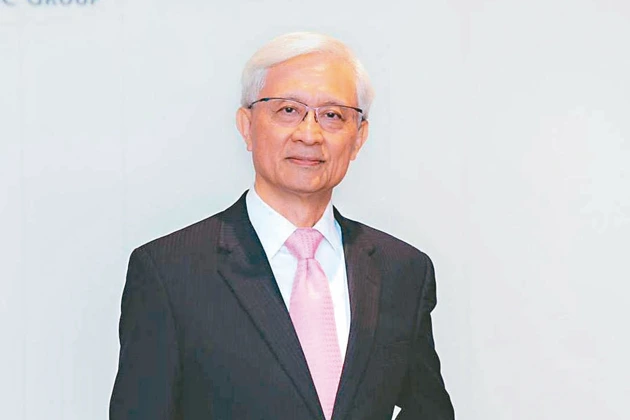
China Steel Corp (CSC), Taiwan's largest steelmaker, is approaching a five-year strategy to double the share of high-end specialty steels in its product, as it pivots toward applications such as robotics, drones, and AI servers. Chairman Chien-Chih Hwang said the company aims to lift specialty products from about 11% of output today to more than 20% by 2030, positioning CSC as a critical backbone of Taiwan's advanced manufacturing supply chain.
CSC has already developed what it claims is the world's thinnest top-grade electrical steel, measuring just 0.1 millimeters, "as thin as a sheet of paper," said Chairman Hwang, targeting applications in high-end drones, humanoid robots, and robotic dogs. The technological barriers are substantial, but so are the rewards: such materials can deliver margins more than 20 times those of conventional steel products.
Management consensus at CSC is that future growth in steel demand will not come from a broad cyclical rebound, but from structurally expanding sectors, including green energy, AI infrastructure, and data centers, as well as robotics and emerging sectors. In terms of strategy, the company is reshaping capacity and accelerating its shift away from traditional steelmaking toward a "high-technology, low-carbon" material supplier.
Amid global overcapacity, CSC plans to retire or mothball up to six ageing production lines, redirecting resources toward precision, high-value applications that are relevant to market sentiment and key breakthroughs in the predicament. Shipments are expected to grow at an average annual rate of about 2%, with profitability driven by value rather than volume.
Chairman Hwang stressed that robotics and drones are not short-term themes but policy-backed strategic industries. In drones, for example, the motor-grade electrical steel typically requires thicknesses of 0.15 to 0.2mm, while electric vehicles are moving steadily toward thinner, higher-performance specifications. CSC's advancement toward 0.1mm places itself among a small global group of producers, alongside Japan's JFE and China's Shugang.
In drones, for example, motor-grade electrical steel typically requires thicknesses of 0.15–0.2 mm, while electric vehicles are moving steadily toward thinner, higher-performance specifications. In the early stages, Tesla's electric vehicles demanded only 0.35mm, suggesting an inclination toward an ultra-thin, high-performance, and efficient future electrical steel manufacturing. CSC's advancement to 0.1 mm places itself among a small global group of producers, alongside Japan's JFE and China's Shougang. However, it is only applicable in high-end applications due to the fact that its manufacturing process is technically challenging, strict yield controls, and high production cost.
"Top-tier steel is priced by the kilogram," Chairman Hwang noted. Even small volumes can generate significant value. A government-backed drone supply chain of thirty billion dollars for 50,000 units, using just one kilogram of premium electrical steel per drone, would require only 50 tonnes of material, but with the value equivalent to roughly 1,000 tonnes of conventional steel.
CSC experts argue that the structural transformation of the global steel industry is irreversible. As traditional construction demand slows and pressures from geopolitics and decarbonization intensify, the industry can no longer compete on volume and price alone. The next battlefield lies in low-carbon, high-precision materials, and robotics and drones are set to become one of its most promising sources of demand, “CSC has to focus on market-driven opportunities, capitalize on the trend.”