



Industrial Development Administration Helps Over 100 Traditional Manufacturers Transform Through Digital Tools to Build Smart Supply Chains
2025/12/30 | By CENS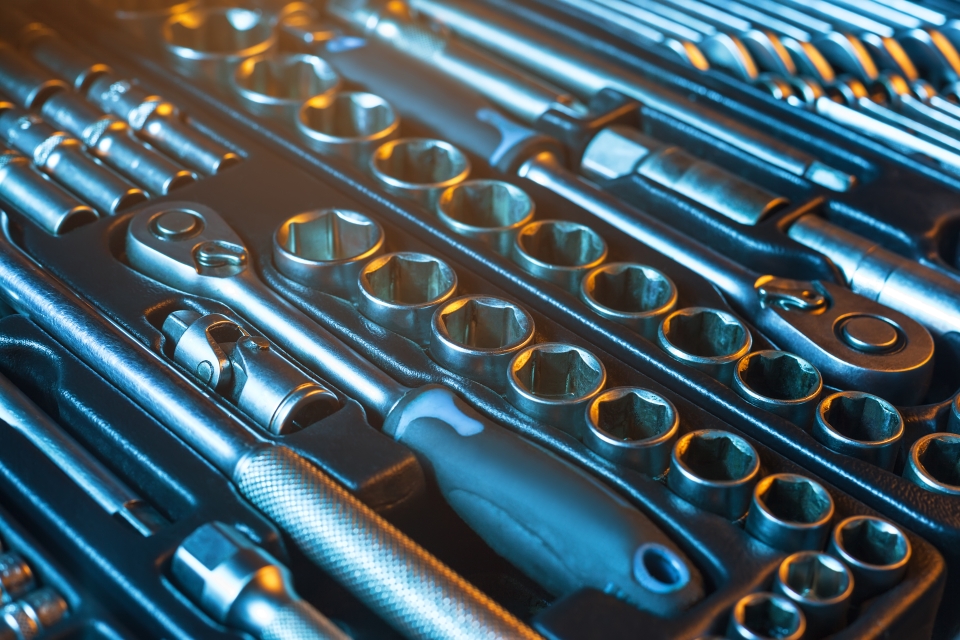
Taiwan's traditional metal and electromechanical industries are moving beyond the OEM mindset. By adopting lean management practices and digital tools, companies are shifting from operating independently to participating in integrated, collaborative supply chain models. The Industrial Development Administration (IDA) under the Ministry of Economic Affairs stated on the 26th that it has assisted 126 metal and electromechanical manufacturers this year in completing lean process improvements, while 118 companies have successfully implemented digital systems. In addition, seven supply chains comprising a total of 72 companies have adopted shared digital platforms, significantly shortening procurement cycles and delivery lead times, and strengthening international competitiveness.
According to the IDA, as global manufacturing advances toward intelligent production, Taiwan's mold, surface treatment, plumbing hardware, and fastener industries are at a critical stage of transformation. Historically reliant on manual record-keeping and fragmented operational data, these sectors have struggled to meet international market demands for precise delivery schedules. In response, the government has, in recent years, leveraged multiple resources to guide companies in reviewing internal processes and introducing lean management and integrated digital systems, substantially improving process transparency and decision-making responsiveness.
At the individual enterprise level, hand tool manufacturer Jeng Sheng Co., Ltd., serves as a representative case. The IDA noted that the company previously faced severe delivery pressure due to complex production line layouts and heavy reliance on manual labor. Following a generational leadership transition, and with government support, the company implemented lean management and pull-based production systems, reorganized workflows, and established standardized operating procedures. As a result, production line waiting time was reduced by 62%, production cycles were significantly shortened, and the company overcame the traditional industry constraint of "experience-driven with limited scalability."
Beyond single-company upgrades, the benefits of horizontal supply chain integration have been even more pronounced. The IDA reported that Shu Chung Industrial Co., Ltd., together with 23 upstream and downstream partners, including screw, forging, and surface treatment suppliers, jointly introduced a shared digital platform this year. By standardizing and enabling real-time sharing of order, procurement, and material information, the procurement cycle was reduced from five days to 2.5 days, while order error rates dropped by 80%, demonstrating the efficiency gains of cross-sector integration.
The IDA noted that, in addition to assisting more than 100 companies with lean improvements this year, it also promoted upstream and downstream lean management initiatives across five supply chains involving 37 companies. As global supply chain competition shifts from individual firms to system-level performance, information connectivity and data sharing are proving effective in enhancing order transparency and supply chain responsiveness. These efforts help companies build high-efficiency manufacturing models and reinforce Taiwan's critical position in the global manufacturing supply chain.